Dejar un mensaje

KAPSOM prueba un nuevo adsorbente de amoníaco a 3 MPa.
KAPSOM prueba un nuevo adsorbente de amoníaco a 3 MPa.
KAPSOM ha completado con éxito una prueba a escala de laboratorio de su adsorbente de amoníaco de última generación, lo que supone un nuevo avance hacia una síntesis de amoníaco a baja presión y con mayor eficiencia energética.
En la producción convencional de amoníaco, la separación del amoníaco del gas de salida del reactor suele requerir refrigeración, un proceso que consume mucha energía. Las tecnologías de separación alternativas, como la adsorción por cambio de presión (PSA), la adsorción por cambio de temperatura (TSA) con integración térmica y la separación por membranas, podrían reducir la demanda de refrigeración y, potencialmente, disminuir la presión del circuito de síntesis a 1-3 MPa. Sin embargo, la disponibilidad limitada de materiales de separación eficientes y rentables sigue siendo un obstáculo importante para su comercialización.
KAPSOM realizó la prueba más reciente a una escala de producción de amoníaco de aproximadamente 1 kg por día. A 3 MPa y 40 °C, cada gramo de adsorbente capturó selectivamente alrededor de 0,16 gramos de amoníaco del gas de reacción aguas abajo del reactor de síntesis de amoníaco.
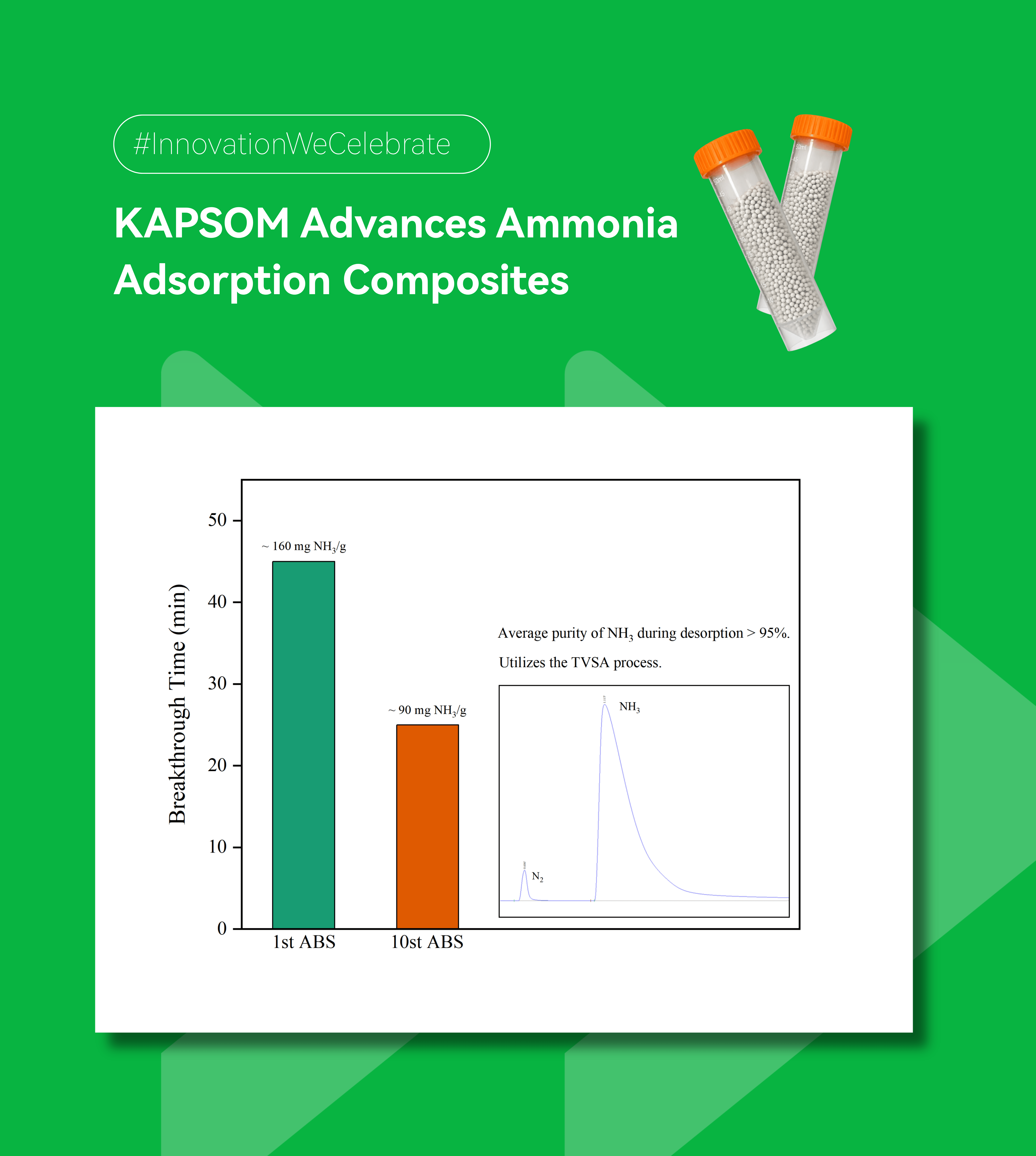
El adsorbente también demostró una resistencia mecánica y un rendimiento de adsorción estables tras más de diez ciclos de adsorción-desorción. No se observó hinchazón significativa ni pulverización de partículas, problemas comúnmente asociados a los materiales de quimisorción.
Mediante un proceso de adsorción por variación de temperatura y vacío (TVSA, por sus siglas en inglés), la etapa de desorción produjo un gas rico en amoníaco con una pureza superior al 95%, lo que facilita la posterior licuefacción del amoníaco y reduce potencialmente el consumo de energía.
Si bien estos resultados validan el rendimiento inicial del material, KAPSOM considera que el desarrollo del adsorbente es solo el primer paso. La siguiente fase se centrará en optimizar la red de intercambio de calor y controlar la inversión total del sistema, dos factores críticos para la implementación comercial de la síntesis de amoníaco mejorada por adsorción.

 IPv6 RED SOPORTADA




Dejar un mensaje
Escanear a WeChat :
